The 7 Void Chess Pieces

Six classical pieces — Pawn, Knight, Bishop, Rook, Queen, King — plus one new piece, the Minister. For each piece you'll see how it moves on an empty board and how voids change its movement.

Piece Values

Void Chess uses a slightly modified piece-value system to reflect how the void mechanic changes the relative power of each piece. The Minister is the most valuable piece on the board after the King — yes, more valuable than the Queen.

Piece Movement Value (pawns)
Pawn1 square forward (2 from start); captures diagonally1.0
KnightL-shape: 2+1 in two perpendicular directions. Jumps over pieces.3.2
BishopAny distance along diagonals3.3
RookAny distance along ranks and files5.0
QueenAny distance in all 8 directions (Rook + Bishop)9.0
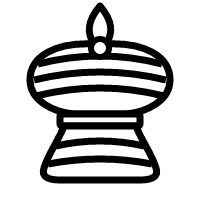
MinisterUp to 2 squares in any direction; can change direction; heals voids13.0
King1 square in any direction; cannot be in check

These values are used by the Void Chess AI engine. They are a guide for trading decisions during a game — not a strict rule.

White Pawn Black Pawn

Pawn

The foundation of the army Value: 1.0

Movement

The Pawn moves one square forward. From its starting rank (rank 2 for White, rank 8 for Black), it can move two squares forward as a special first move. The Pawn captures diagonally one square forward — never straight ahead.

Special rules

  • En passant: If an enemy pawn moves two squares from its starting rank and lands beside your pawn, you can capture it as if it had moved only one square — but only on your immediately next turn.
  • Promotion: When your pawn reaches the opposite back rank (rank 9 for White, rank 1 for Black), it must promote to a Queen, Rook, Bishop, Knight, or Minister.
  • Pawns cannot move backward, ever.
Movement on an Empty Board (white pawn on starting rank e2)
9
8
7
6
5
4
3
2
1
P
P
P
a
b
c
d
e
f
g
h
i
Forward move (1 square, or 2 from starting rank)Red outline = diagonal capture targets
Pawn Cannot Move Onto a Void (or capture on a void)
9
8
7
6
5
4
3
2
1
P
P
a
b
c
d
e
f
g
h
i
Only legal moves nowBlack tiles = voids (block movement and captures)

In Void Chess

The 9×9 board gives each side 9 pawns instead of 8 — one for every file (a through i). This makes pawn structure denser and central pawn breaks more consequential. Every pawn capture creates a red unstable tile that will become a void on the next turn, so pawn trades are no longer "free."

Pawns cannot move onto void tiles for any reason — neither forward moves nor diagonal captures can land on a void. A void directly in front of a pawn blocks it entirely.

Be careful: Pawn captures in the center (e-file, especially around your king's future castled position) often create voids in places you needed for your own pieces. Think twice before capturing with a pawn.
Strategy tip: Pawns are also your most flexible promotion candidates. In Void Chess, promoting a pawn to a Minister is sometimes stronger than a Queen — especially if your original Minister has been captured.
White Knight Black Knight

Knight

The only jumper Value: 3.2

Movement

The Knight moves in an L-shape: two squares in one direction (horizontal or vertical), then one square perpendicular. From an open square it can reach up to 8 different squares.

The Knight is the only piece in chess that can jump over other pieces. Friendly or enemy, the path is irrelevant — only the landing square matters.

Special rules

  • Captures by landing directly on an enemy piece.
  • Cannot land on a square occupied by your own piece.
Movement on an Empty Board (knight at e5)
9
8
7
6
5
4
3
2
1
N
a
b
c
d
e
f
g
h
i
All 8 L-shape moves available
Knight Cannot Land on a Void (even though it jumps)
9
8
7
6
5
4
3
2
1
N
a
b
c
d
e
f
g
h
i
Legal L-moves (5 of 8 — 3 squares are voided)Black tiles = voids

In Void Chess

Knights are especially valuable in the endgame. As voids accumulate, sliding pieces (Bishop, Rook, Queen) get blocked by them, but Knights can hop over allies and enemies alike. A Knight can deliver checkmate on a board where a Queen would be helpless.

However, jumping over pieces is NOT the same as jumping over voids. The Knight cannot land on a void tile. Even if the L-shape would normally take it there, the void blocks the landing.

But the Knight CAN jump OVER voids

This is the key insight: voids only matter for the landing square. Voids in the path do not block the knight.

In classical chess, a knight can jump over any piece in its way — friendly pawns blocking it, enemy rooks, anything. The same is true for voids: the knight only cares about its destination, not what is between it and the destination. As long as the landing square is empty (or holds an enemy piece you can capture), voids on the surrounding squares do not matter at all.

The diagram below shows a knight at e5 with voids on all 8 adjacent squares (the squares a king could step to). Even with this much destruction surrounding it, the knight still has access to all 8 of its normal L-shape moves — because none of those 8 landing squares are voided.

Knight Jumps Over Voids — All 8 L-moves Still Available
9
8
7
6
5
4
3
2
1
N
a
b
c
d
e
f
g
h
i
All 8 L-shape landing squares are still reachableBlack tiles = voids (the knight jumps over them)
Strategy tip: Trade Bishops for Knights early if you expect a long game with many captures. Knights become stronger as the board breaks down; Bishops become weaker because a single void can shut down a diagonal.
White Bishop Black Bishop

Bishop

The diagonal sniper Value: 3.3

Movement

The Bishop slides any distance along diagonals. It cannot jump over pieces — its path must be clear all the way to its destination.

Each side starts with two Bishops — one on each color. A Bishop is locked to its starting color for the entire game and can only ever reach half the squares on the board.

Special rules

  • Captures by sliding onto an enemy piece (path must be clear).
  • Cannot land on a square occupied by your own piece.
Movement on an Empty Board (bishop at e5)
9
8
7
6
5
4
3
2
1
B
a
b
c
d
e
f
g
h
i
Any distance along 4 diagonals
Voids Block the Diagonal — Bishop Cannot Pass Through
9
8
7
6
5
4
3
2
1
B
a
b
c
d
e
f
g
h
i
Reachable squares (diagonals cut short)Black tiles = voids

In Void Chess

Bishops are more fragile in Void Chess than in classical chess. Voids block diagonals just like a piece would. A single void on a long diagonal cuts the Bishop's range in half. Two voids placed by an opponent can lock a Bishop into a tiny corner of the board.

Be careful: The Bishop pair — long valued at slightly more than two Knights in classical chess — is less reliable in Void Chess. As the board breaks down, your Bishops can become spectators.
Strategy tip: Use Bishops aggressively in the opening and early middle-game while diagonals are still open. Don't hoard them for the endgame — they often decay in value as voids form.
White Rook Black Rook

Rook

The straight-line specialist Value: 5.0

Movement

The Rook slides any distance along ranks (horizontal) and files (vertical). Like the Bishop, it cannot jump.

Special rules

  • Castling: Once per game, the Rook can swap places with the King under specific conditions. Both pieces must not have moved, the king must not be in check, and the squares between them must be empty and unattacked.
  • Captures by sliding onto an enemy piece.
Movement on an Empty Board (rook at e5)
9
8
7
6
5
4
3
2
1
R
a
b
c
d
e
f
g
h
i
Any distance along files and ranks
Voids Block Files and Ranks — Rook Cannot Pass Through
9
8
7
6
5
4
3
2
1
R
a
b
c
d
e
f
g
h
i
Reachable squares (up and right are blocked)Black tiles = voids

In Void Chess

The 9×9 board gives Rooks more open files and ranks to work with. But voids block files and ranks just like they block diagonals — the Rook cannot pass through a void. A Rook on an open file is very strong; a Rook trapped behind voids is barely better than a Bishop.

Castling on a 9×9 board works the same way as classical chess — but the King's destination square is different because of the extra file. See the official rules for exact castling distances.

Strategy tip: When a void forms next to your Rook, look for ways to use that void as a defender. Voids that block opponent sliders are sometimes your friend.
White Queen Black Queen

Queen

The most powerful regular piece Value: 9.0

Movement

The Queen combines the Rook and the Bishop: it slides any distance in any of 8 directions — horizontal, vertical, or diagonal.

Special rules

  • Captures by sliding onto an enemy piece.
  • Cannot jump over pieces or voids.
  • A pawn that promotes most often becomes a Queen.
Movement on an Empty Board (queen at e5)
9
8
7
6
5
4
3
2
1
Q
a
b
c
d
e
f
g
h
i
Any distance in all 8 directions
Voids Cut Off the Queen's Lines
9
8
7
6
5
4
3
2
1
Q
a
b
c
d
e
f
g
h
i
Reachable squares (3 of 8 directions cut short)Black tiles = voids

In Void Chess

In classical chess, the Queen is the most valuable piece you'd ever trade for. In Void Chess, the Queen is no longer your most precious piece — that title belongs to the Minister. The Queen is still extremely powerful, but its sliding nature means it suffers more from voids than the Minister does. A few well-placed voids around an enemy Queen can shut down most of its directions at once.

Be careful: Trading your Queen for an opponent's Queen is fine. Trading your Minister for an opponent's Queen is almost always a mistake.
Strategy tip: Don't bring your Queen out too early. Each move with the Queen risks captures, and Queen captures create big red tiles in the center where you can't afford to lose squares.
White King Black King

King

The piece you cannot lose Value: priceless

Movement

The King moves one square in any of 8 directions — the same pattern as the Queen, but only one square at a time.

The King cannot move into check. A move that would place your own king under attack is illegal.

Special rules

  • Castling: Once per game, the King can swap places with a Rook (see the Rook section for conditions).
  • Checkmate: The game ends when your opponent's King is in check and has no legal escape.
  • Stalemate: If it's your turn and you have no legal moves but your King is not in check, the game is a draw.
Movement on an Empty Board (king at e5)
9
8
7
6
5
4
3
2
1
K
a
b
c
d
e
f
g
h
i
1 square in any of 8 directions
King Cannot Step on a Void — Escape Squares Lost
9
8
7
6
5
4
3
2
1
K
a
b
c
d
e
f
g
h
i
Legal squares (6 of 8 — 2 are voided)Black tiles = voids (cannot move here)

In Void Chess

King safety is more critical in Void Chess than in classical chess. The King cannot step onto a void tile. As voids accumulate around your King, your escape squares disappear one by one. Two or three well-placed voids near your King can lead to a checkmate that would not exist in regular chess.

Be careful: A King trapped between two voids is in mortal danger. If you are losing space around your King, use your Minister to heal voids before things spiral out of control.
Strategy tip: Castle early and don't open up the pawns in front of your King unnecessarily. Voids in front of your castled King are catastrophic — they create permanent attack lanes.
White Minister Black Minister

Minister

The piece that only exists in Void Chess Value: 13.0

Movement

The Minister moves up to 2 squares in any of the 8 king directions. After the first step, it can change direction for the second step — like a small, slow knight without the L-shape restriction.

From an open square, the Minister can reach all 24 squares in the 5×5 area around it.

Three unique powers

1. Captures peacefully. When the Minister captures an enemy piece, the tile does not turn red. No void will form. Every other piece creates a red tile when it captures — only the Minister does not.

2. Heals red unstable tiles. If an enemy piece is sitting on a red tile, the Minister can capture it. The enemy piece dies, and the red tile becomes a normal square again. No void forms.

3. Restores black voids. The Minister is the only piece in the game that can move onto a black void tile. When it does, the void disappears and the square becomes a normal chess square again.

Other rules

  • Cannot jump over pieces — each step must land on an empty or capturable square.
  • Cannot capture its own pieces.
  • Cannot return to its starting square in a single 2-step move.
  • Pawns can promote to a Minister.
Movement on an Empty Board (minister at e5)
9
8
7
6
5
4
3
2
1
Minister
a
b
c
d
e
f
g
h
i
Up to 2 king-steps — 24 reachable squares
Minister CAN Step on Voids — and Heal Them
9
8
7
6
5
4
3
2
1
Minister
a
b
c
d
e
f
g
h
i
All 24 squares reachable (Minister ignores voids)Black tiles with orange dots = voids that the Minister can heal by stepping onto them

In Void Chess

The Minister is the only piece in the game that can move onto a void tile. Every other piece treats voids as walls. The Minister treats them as opportunities — stepping onto a void heals it back to a normal square, growing the board back.

This is why the Minister is the most valuable piece on the board after the King. Without it, your half of the board slowly turns to permanent black voids and there is nothing you can do about it.

Strategy tip: Treat the Minister like a second King. Do not trade it for anything — not even a Queen. Without your Minister, you cannot heal red tiles or restore voids. Your opponent will slowly destroy your half of the board.

Read the complete strategy guide for the Minister on the dedicated Minister page.

Pawn Promotion

When your pawn reaches the back rank of the opposite side (rank 9 for White, rank 1 for Black), you choose a piece to promote it into:

If you have already lost your Minister, promoting to a new one can change the entire game. A pawn promotion is one of the few ways to bring the Minister back.

Strategy tip: Sometimes promoting to a Knight is better than a Queen — for example, when a Knight delivers immediate checkmate or fork. But in Void Chess specifically, promoting to a Minister is the most common "non-Queen" choice, especially in long endgames where voids dominate.

What to Read Next

Now that you know the pieces, dive deeper into the rules that make Void Chess unique.

Ready to play?

You know the pieces. Now go use them.

Play in Browser GET IT ON Google Play